
Science of Gratitude, Mouth Breathing, Rudolph/Pathology, 2025 Year in Review/Cheers to 2026, and PYV!
Enjoy some educational & inspiring blog reading & be sure to roll your shoulders & focus on allowing easy breathing as you do! Make it a GREAT day. YOU are worthy and YOU (and YOUR VOICE) are BEAUTIFUL. #DONTFORGETIT 
The SCIENCE of Gratitude...
The science of gratitude... The SCIENCE of GRATITUDE shows that practicing it can PHYSICALLY CHANGE your BRAIN and BODY leading to better mental and physical health.
Gratitude triggers the release of dopamine and serotonin, which are neurotransmitters associated with happiness and well-being. This practice can reduce stress, improve sleep, strengthen relationships, and even increase happiness and life satisfaction.
What is GRATITUDE? Robert Emmons has studied gratitude for over 20 years and is considered an authority on the subject. He defines gratitude as a quality with two key components: an acknowledgment that goodness exists in the world, and a recognition of the sources of this goodness outside ourselves, whether it’s other people or a higher power. For me, I have faith that the source of goodness is God and others he has blessed me with.
Gratitude can be broken down into the 4 As: AWARENESS (identify and notice the good things in your life), ACKNOWLEDGEMENT (recognize and value these good things), ACCEPTANCE (actively embrace the good), and ACTION (be quick to express your gratitude GRATITUDE CREATES AND STRENGTHENS NEW NEURAL PATHWAYS.
Keep reading to learn lots more amazing info about gratitude!
MRI tests show that expressing gratitude activates different parts of your brain and improves their function. They include the hippocampus (responsible for processing memories), the amygdala (in charge of regulating emotions), and the prefrontal cortex (handles empathy, decision-making, and emotional regulation).
The studies have shown that acts of gratitude create and strengthen neural pathways related to happiness and well-being. This means that feeling thankful today will make it easier to access and experience positive emotions in the future.
Gratitude increases production of neurotransmitters. Being thankful stimulates your limbic system, encouraging the hippocampus and amygdala to produce more dopamine and serotonin. These feel-good hormones are associated with higher levels of happiness, calmness, focus, and motivation, contributing to an overall positive mood.
Gratitude helps manage our stress responses: gratitude helps regulate the brain’s production of stress hormones such as cortisol… Focusing on the positive also triggers your parasympathetic nervous system into action, which calms your body by lowering heart rate and blood pressure, and helps you relax and find balance after stressful events.
Gratitude rewires your cognitive processes: not only does gratefulness change how the brain works, it transforms how you think and see the world. It rewires our cognitive processes, altering our thinking, learning, memory, perception, and attention. It helps us see the bright side of life. By practicing gratitude, you can trade a negative thought patterns for a positive mindset.
Gratitude releases feel-good chemicals via stimulating the brain to release, dopamine and serotonin, improving mood, and making you feel more content.
Gratitude actually rewires neural pathways and a regular practice of gratitude can strengthen neural pathways associated with happiness and well-being, making it easier to access positive emotions in the future.
Gratitude improves sleep by shifting the focus away from worries and anxiety and toward positive things. It can help you fall asleep faster and enjoy a more peaceful rest.
Gratitude enhances cognitive function by activating the prefrontal cortex which is involved in critical thinking, and it can lead to better decision-making and productivity.
Gratitude boosts resilience, which can help reframe negative experiences, making you more resilient to trauma and adversity.
Gratitude promotes better social relationships as it makes other feel valued, strengthening bonds with family, friends, and coworkers.
Gratitude improves physical health as studies do show that grateful people experience fewer aches and pains, report feeling healthier, and are more likely to take care of their health. It also contributes to better cardiovascular health and a stronger immune system.
Gratitude increases well-being, and is consistently linked to greater happiness, optimism, and life satisfaction.
Gratitude literally changes your biochemistry. It makes you healthier. It rewires the brain. It promotes happiness from the inside versus the external. Studies show that keeping a gratitude journal or thinking thankful thoughts help ameliorate the effects of physical pain, such as injury.
Gratitude is about changing your perspective… It has a lot to do with optimism – with seeing the good and acknowledging the source of good in our lives. It’s about appreciating what we have. Gratitude is linked with having a sense of purpose. It helps us bounce back from negative experiences faster. It helps us become more resilient.
There are no negative side effects of feeling gratitude… There are only POSITIVE ones.. So WHY NOT?
You CAN become more grateful. Adopting an ATTITUDE of GRATITUDE should be a top MISSION in all of our lives. Gratitude is like a muscle—the more we practice being grateful the more we become connected to gratitude’s transformative benefits. It may require effort at the beginning, but it soon becomes a HABIT. Start small and give THANKS for even the tiniest of things that bring you JOY. (Philip Lazarus, Rachel Ritchie).
Wishing all of you an absolutely wonderful Thanksgiving!! I am GRATEFUL for ALL of YOU and encourage you to practice gratefulness daily if you don’t already. START RIGHT NOW: I’m grateful I am ALIVE. I am grateful for my VOICE. #letsgo
.
.
#voxfit #gratitude #practicegratitude #gratefulheart #gratefulforvoice #thankful #happythanksgiving #research #voice #occupationalvoiceuser #vocalhealth #vocalefficiency #vocaldynamics #poweredbypassion #speechpathology #speechpathologist #voicespecialist #laryngology #voicesfittoinspire
Mouth Breathing...
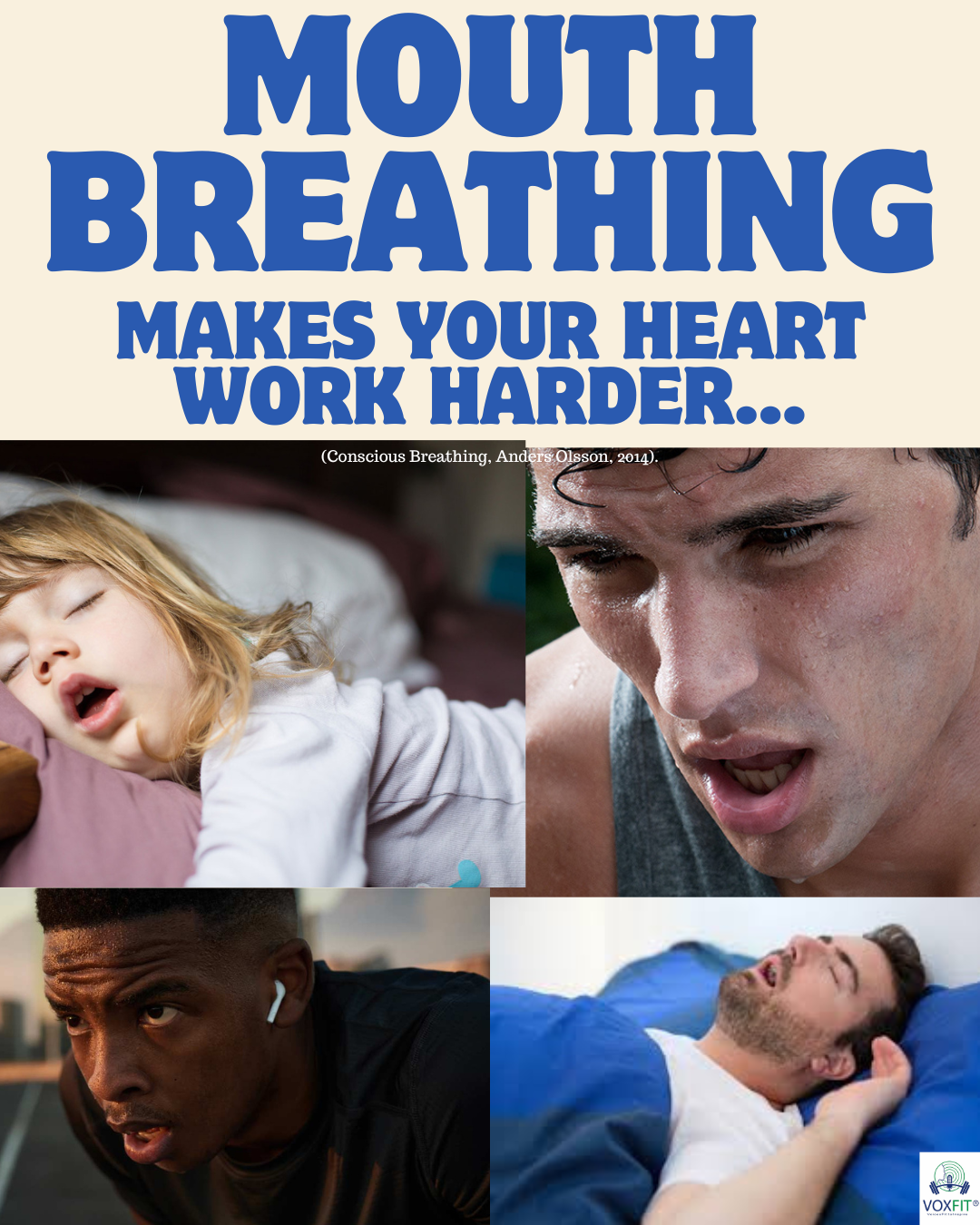
Anybody that knows me knows I’m very passionate about BREATHING… Especially NOSE breathing, as there are SO many benefits for not only our head/neck region, but also (& especially!) our whole entire BODY & overall HEALTH. I’m grateful for training in the Buteyko method & Oxygen Advantage— as both provide me with this knowledge & perspective.
Recent research shows that nitric oxide (NO) increases the amount of oxygen (O2) transferred from inhaled air into your blood. You don’t get any NO down into your lungs when you breathe through your mouth, & consequently your heart is forced to work harder.
Over-breathing leads to O2 deficiency. Your heart is a major consumer of O2. While you take in more O2 when you over-breathe, the carbon dioxide (CO2) deficiency that occurs actually results in less O2 being delivered to your organs. In a larger ER unit in the US, the CO2 levels in the blood of 8607 patients were measured regularly over an 18 month period. As many as 45% of the patients had CO2 levels below 35mmHg, which implies that they were over-breathing, since the normal level is 40mmHg.
NO that is produced in the sinuses not only dilates the smooth muscles of your airways, but is also antibacterial. When you breathe through your mouth no NO is drawn through your airways, & your protection against bacteria is reduced.
Among other things, overbreathing or irregular breathing results in:
-low CO2 levels in the blood
-less O2 reaching the cells
-impaired fat metabolism
-increased sugar cravings
-a stressed body
-digestion on the backburner, impaired nutrient uptake
-tired eyes
-snoring, restless sleep
-forward head posture
-set back jaw
-poor cheekbone definition
-sleep apnea
-dry mouth & throat
-dry, unfiltered, cold air
Among other things, proper (nasal) breathing results in:
-optimum CO2 levels in blood
-a lot of O2 reaches the cells
-high fat metabolism
-decreased sugar cravings
-a relaxed body
-effective digestion, good nutrient uptake
-alert eyes
-straight chin
-ideal cervical posture
-filtered, warmed, moistened air
-well developed jaw
-optimal tongue posture
-good definition of cheekbones
-restful sleep
(Conscious Breathing, Anders Olsson, 2014).


.
.
#voxfit #voice #breathing #breathethroughyournose #nosebreathing #breathingexercises #breath #breathe #diaphragm #oxygenadvantage #lightslowdeep #diaphragmaticbreathing #parasympatheticnervoussystem #prioritizeyourvoice #healthyvoice #vocalhealth #vocalwellness #vocalefficiency #vocaldynamics #speechpathologist #voicespecialist #fitnessinstructor #prioritizeyourhealth #letsgo #vocalinstrument #occupationalvoiceuser
Rudolph/Pathology... 
YOU NEED A CLOSER LOOK. Why? Because a laryngoscopy is NOT enough!!
This patient was referred from an outside office after having only a laryngoscopy. She was diagnosed with vocal nodules and muscle tension dysphonia. As obviously noted from the photos, this is not the case. It’s easy to see that there is quite a bit going on here and the noted hemorrhagic lesion likely consistent with a vocal fold polyp on the medial edge of the left true vocal fold in the middle one third region is the reason for her dysphonia-related complaints. It is not likely that voice therapy will be the only recommendation based on these new findings. Given the hemorrhagic appearance and nearby erythema as well, it is highly likely that there is a phonotraumatic use pattern-related component that needs to be transformed, and if there ends up being a recommendation for surgery, voice therapy will be very helpful in optimizing surgical results. It is also strongly recommended the patient follow through with voice therapy after a surgery to ensure changes in behavioral patterns are solidified, optimal healing is achieved, and recurrence can be prevented.
You all know me and my love for videostroboscopy… Better diagnoses lead to better TREATMENT, which leads to better overall RESULTS! This is just another example of the importance of taking a closer look  with this amazing exam.
.
.
#voxfit #voice #videostroboscopy #strobe #takeacloserlook #doastrobe #prioritizeyourvoice #healthyvoice #vocalhealth #vocalwellness #vocalefficiency #vocaldynamics #speechpathologist #voicespecialist #fitnessinstructor #prioritizeyourhealth #letsgo #vocalinstrument #occupationalvoiceuser
2025 REVIEW and CHEERS to 2026!
CHECK OUT THE VIDEO ABOVE!
WOW!! 2025 was SUCH an INCREDIBLE year and I am SO grateful.
Sometimes it's easy to get caught up in the busy-ness of business and life in general, but it's so great to be able to look back and APPRECIATE all that has happened in a quick 365 days!!!
From so many patients and clients, to research, conferences, walks/fundraisers, presentations, development, growth, and sharing my passions with others... I am BEYOND THANKFUL for the last year.
There are so many amazing people I am grateful for as well--colleagues, physicians, staff I work with every day, those incredible individuals who are a part of our support groups, and those wonderful people who trust me everyday with their care. I also appreciate all of YOU in the VOXFIT® family and those who I have come to know via the online community.
We are all here because we are passionate about VOICE, wellness, fitness, speech pathology, helping others, and/or becoming the best version of ourselves in this wonderful life.
SENDING LOTS OF LOVE TO ALL OF YOU who made my 2025 so special... AND expressing immense GRATITUDE for a beautiful year.
SENDING LOTS OF POSITIVITY, HOPE, FAITH, GOOD VOICE VIBES, and lots of LOVE to this upcoming year of 2026.. I cannot wait to see all the amazing things in store!! Wishing you all the same as well. CHEERS TO 2026!
.
.
#voxfit #voice #speechpathology #speechpathologist #2025 #cheerstothenewyear #gratitude #hope #goodvibes #goodthingsahead #sendinglove #gratefulheart #voicesfittoinspire #cheerstoyourbestvoice #yearinreview
PYV: Anddd of course, always REMEMBER to PRIORITIZE YOUR VOICE! ...
How are YOU prioritizing your voice today? And everyday? As an OCCUPATIONAL VOICE USER, it SHOULD be one of your top priorities!
.
What do you need to know to keep your voice healthy? You should understand how the voice works, how to protect and care for your voice, and how to use your voice and entire vocal mechanism in the most efficient, effective, and dynamic ways possible.
.
.
I’m super PASSIONATE about this population of voice users (I’m one and most of you are too!), and am HERE TO HELP! Reach out with any questions, concerns, or if you’d like to work together. Email me at [email protected] or DM me on @voxfit_ ...
#prioritizeyourvoice
Author

Sara Davis, M.A. CCC-SLP
Author
Check out the Meet The Founder page for bio!
Recent Posts